
How to Write a Personal Chef Proposal That Actually Closes
Most personal chefs lose clients before they ever cook a meal. The proposal is where it happens. Here's how to write one that actually gets a yes.

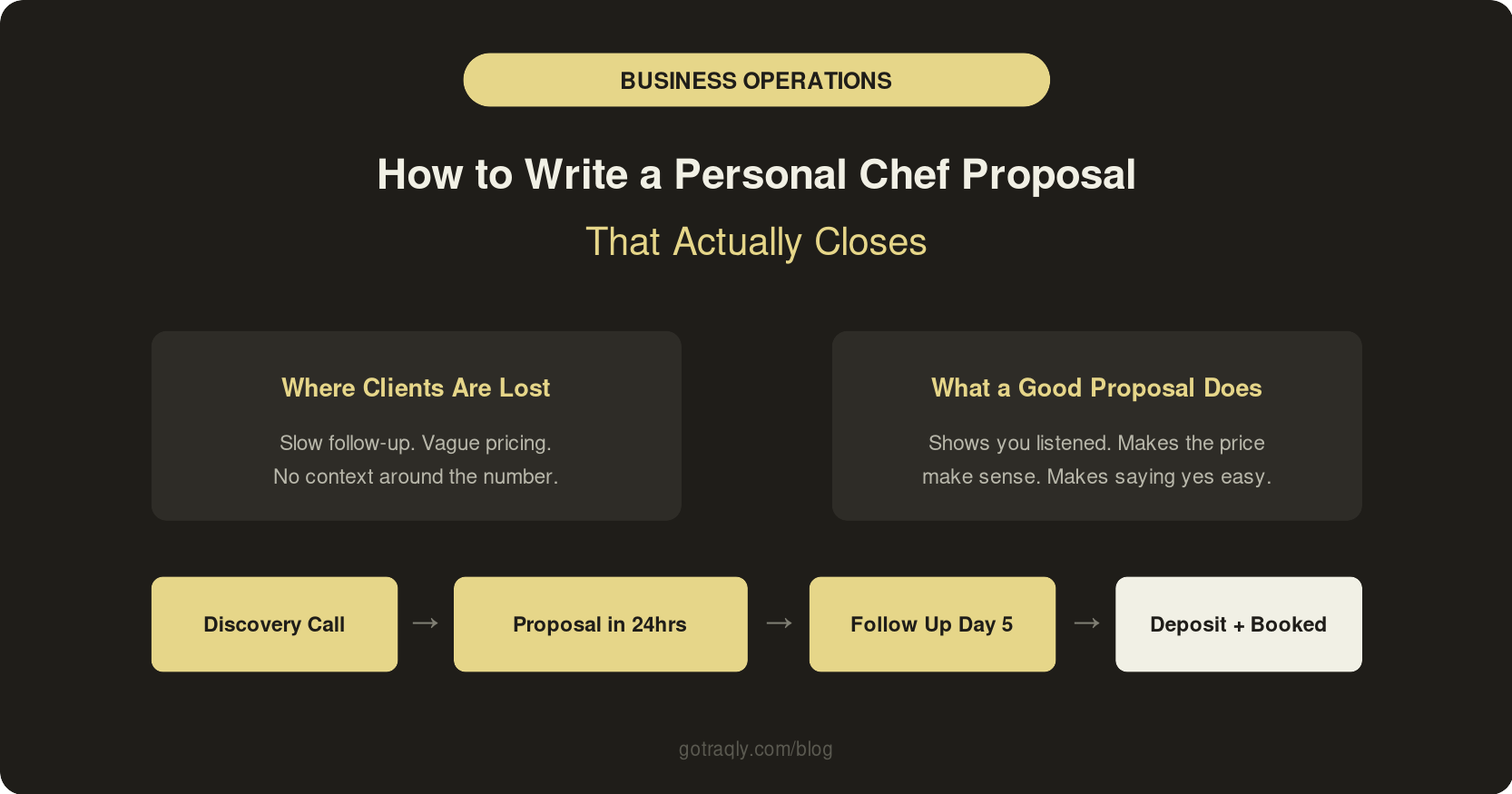
Most personal chefs don't lose clients because of the food. They lose them before they ever cook a meal.
Someone reaches out. They're interested. You have a quick call or exchange a few texts. You say "I'll send something over." And then one of two things happens: you send a sloppy quote in a text message that doesn't communicate your value, or you get busy with your other clients and don't send anything at all until it's too late.
Either way, the client moves on. They found someone who responded faster, or they just lost the momentum and decided to figure out dinner on their own.
We hear this constantly from the chefs we work with. Not "I can't find clients." More like "I had a lead and I blew it because I didn't follow up fast enough" or "I sent a price over text and never heard back." The proposal is the step where the most money leaks out of a personal chef business, and almost nobody treats it like a real part of the sales process.
Here's how to fix that.
Why the Proposal Matters More Than You Think
A proposal isn't a price quote. A price quote is a number. A proposal is the document that makes someone feel confident enough to hand you the keys to their kitchen every week.
Think about what's happening on the client's side. They've never hired a personal chef before (most haven't). They don't know what to expect. They don't know what's normal. They're probably spending more on this than they've ever spent on food, and they're wondering if it's worth it. Your proposal is the thing that answers those questions before they have to ask.
A good proposal does three things: it shows you listened to what they need, it makes the pricing feel reasonable by showing what's included, and it makes saying yes easy by being clear about next steps.
A text message that says "$400 per cook day plus groceries" does none of those things.
What to Include in Every Proposal
There's no single right format. But after talking to dozens of chefs about what works and what doesn't, here's what should be in every proposal regardless of whether the client wants weekly meal prep, a dinner party, or ongoing private chef services.
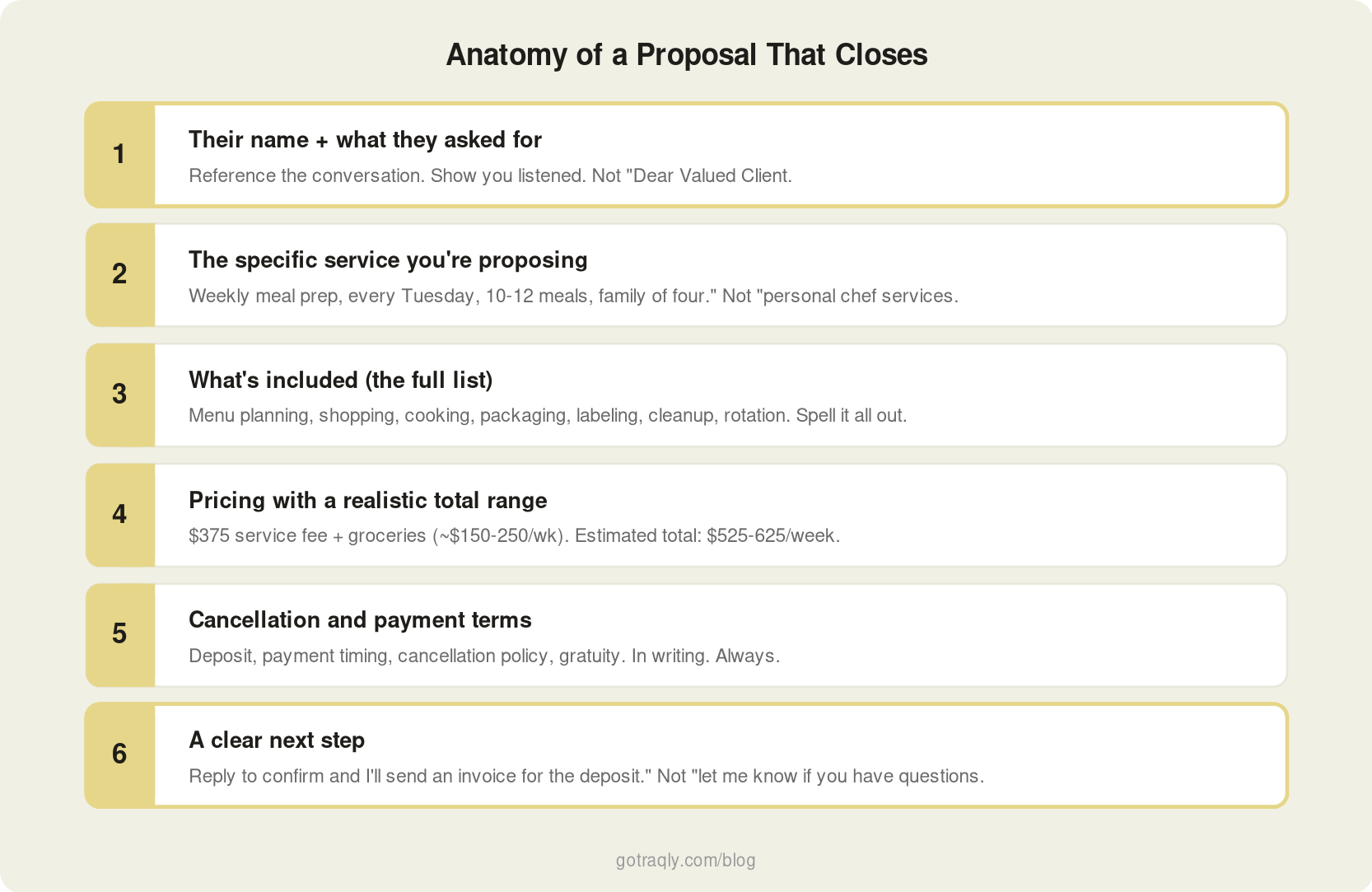
1. Their name and what they asked for.
Start with the client, not with yourself. Reference the conversation you had. "Hi Sarah, great talking with you on Tuesday. Based on what you shared about your family's schedule and dietary needs, here's what I'd suggest." This takes ten seconds and immediately signals that this isn't a generic template you blast to everyone.
2. The service you're proposing.
Be specific. Not "personal chef services" but "weekly meal prep, every Tuesday, 10-12 meals for your family of four, customized to your preferences." If it's a dinner party: "6-course Mediterranean dinner for 12 guests on Saturday, October 18th. Arrival at 3pm, dinner service at 7pm, cleanup completed by 10pm."
The more specific you are, the easier it is for the client to picture it happening. Vagueness creates hesitation.
3. What's included.
This is where most chefs under-sell themselves. You're not just cooking. List what you actually do:
- Menu planning and customization based on their dietary needs and preferences
- Grocery shopping (specify whether you shop or they provide groceries)
- Cooking, packaging, labeling, and storage instructions
- Kitchen cleanup
- Ongoing menu rotation so they're not eating the same thing every week
For events, include: consultation, menu development, grocery procurement, prep, cooking, plating/service, and cleanup. If you're bringing your own equipment, say so. If you're managing the timeline for a multi-course dinner, say that too.
People don't know what goes into your work. When they see the full list, the price makes sense.
4. The pricing.
There are two ways to present pricing, and which you choose depends on the service.
For weekly meal prep, most chefs use a flat service fee plus grocery reimbursement. Present it clearly:
"Service fee: $375 per cook day Groceries: billed separately at cost, typically $150-$250/week for a family of four Total estimated weekly cost: $525-$625"
Don't just say "$375 plus groceries." Give them a realistic total range so there's no sticker shock when the grocery receipt comes in.
For events and dinner parties, an all-inclusive per-person price is usually cleaner:
"$150 per person, all-inclusive (12 guests = $1,800) Includes: consultation, menu development, grocery procurement, cooking, plating, service, and cleanup."
All-inclusive pricing works better for events because the client wants one number. They don't want to think about grocery receipts for a dinner party. They want to know what it costs.
For either format, always clarify: Is gratuity included or separate? This is the most common source of post-service awkwardness in the entire category. State it upfront. "Gratuity is not included and always appreciated" or "Gratuity is included in the quoted price." One sentence prevents a weird conversation later.
5. Your cancellation and payment terms.
Keep it simple but put it in writing. Example:
"50% deposit required to confirm booking. Remaining balance due day of service. Cancellations within 48 hours of the scheduled cook day are subject to a 50% cancellation fee."
For weekly clients: "Payment is due weekly on the day of service. Either party may cancel the recurring arrangement with two weeks' notice."
Not having terms in writing is how you end up eating the cost of $200 in groceries when someone cancels the morning of.
6. A clear next step.
End with exactly what happens next. "If this looks good, just reply and I'll get you on the schedule for Tuesdays starting next week." Or "To confirm the October 18th dinner, I'll need a 50% deposit of $900. I can send an invoice right now."
Don't end with "let me know if you have any questions." That's passive. Give them a specific action to take.
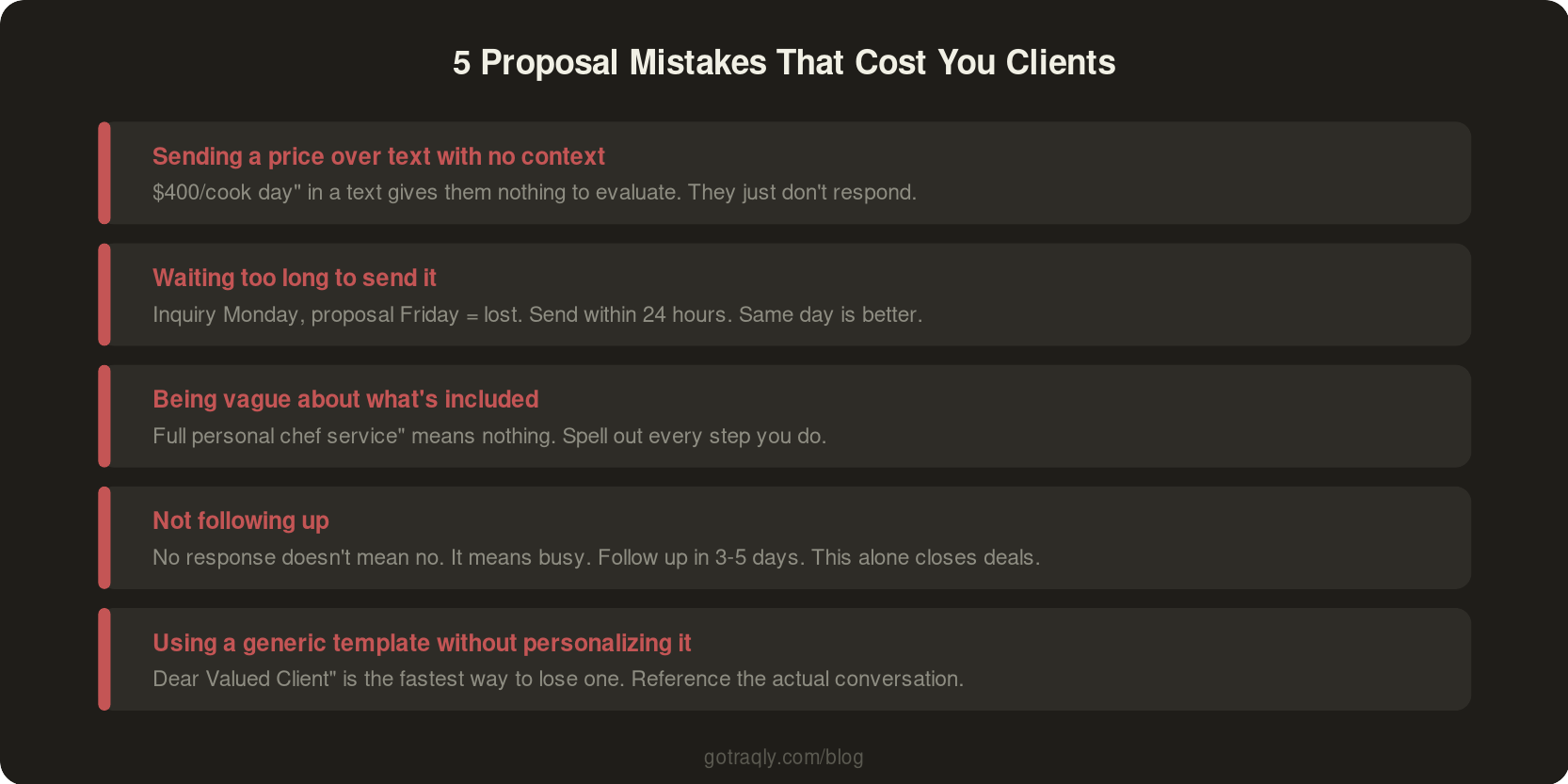
Proposal Mistakes That Cost You Clients
Sending a price over text with no context. "$400/cook day" in a text thread doesn't communicate value. It just communicates a number that the client has no framework to evaluate. Is that expensive? Cheap? What's included? They don't know. And instead of asking, most people just don't respond.
Waiting too long to send it. If someone inquires on Monday and you send a proposal on Friday, you've already lost. The momentum dies fast. Aim to send a proposal within 24 hours of the initial conversation. Same day is better.
Being vague about what's included. "Full personal chef service" means nothing to someone who's never hired a personal chef. Spell it out. The more detail you include about what you do, the more reasonable the price feels.
Not following up. You sent a proposal and didn't hear back. That doesn't mean they're not interested. It means they're busy. Follow up within a week. A simple "Hey Sarah, just wanted to check in on the proposal I sent over. Happy to answer any questions or adjust anything." This alone will close deals you're currently losing.
Copying someone else's generic template without personalizing it. Clients can tell. If the first line of your proposal is "Dear Valued Client" or if it reads like a legal document, you've already set the wrong tone. This is a personal service. The proposal should feel personal.
Not including a photo of your food. You're a chef. Your food is your product. Including even one or two photos of dishes you've made (especially if they're similar to what you're proposing) adds a visual element that a wall of text can't match.
Meal Prep Proposals vs. Event Proposals
The structure is the same, but the emphasis shifts.
For meal prep proposals, the focus is on the recurring relationship: what their weekly schedule looks like, how you handle dietary preferences, how menu rotation works, and what the ongoing cost will be. The client is committing to a weekly expense, so they need to feel confident that the value will be consistent over time. Reference your pricing structure clearly.
For event proposals, the focus is on the specific occasion: the menu in detail (courses, dishes, wine pairing if applicable), the timeline of the evening, what you're handling vs. what they need to provide (venue, serving ware, bar setup), and the all-in cost. Events are one-time purchases, so the proposal needs to make them feel like the evening is going to be special. This is where a photo or two of similar events you've done makes a real difference.
For clients who want both (weekly meal prep plus occasional events), present them as separate line items in the same proposal. Don't bundle them into one confusing number.
A Real Proposal Flow That Works
Here's how the best chefs we've talked to handle it from inquiry to yes:
Step 1: The discovery call (15-20 minutes). Phone or video. Ask about their family size, dietary needs, schedule, what they're currently doing for meals, and what's not working. For events, ask about the occasion, guest count, vibe, budget range, and any dietary restrictions among guests. Take notes. These notes become your proposal.
Step 2: Send the proposal within 24 hours. Reference specific things from the call. Include everything listed above. Keep the tone conversational, not corporate. PDF or a clean email works. Don't send a Google Doc they need permission to view.
Step 3: Follow up in 3-5 days if no response. Short, friendly. "Just checking in, happy to adjust anything."
Step 4: Confirm and collect deposit. Once they say yes, send an invoice for the deposit immediately. Don't wait. The faster you lock it in, the less likely they are to second-guess.
Where Traqly Fits
This entire process is what we built Traqly to handle. You tell Ask Traqly: "Put together a proposal for the Garcia family, weekly meal prep, family of four, two vegetarians, $400 cook day fee." It pulls from your past pricing, your menu library, and your proposal template. You review it, tweak it, send it. Five minutes instead of forty-five.
Client says yes? Traqly moves them into your client management system with their dietary preferences, contact info, and payment terms already in place. No re-entering data. No copy-pasting from texts into spreadsheets.
Client goes quiet? Traqly flags it. "The Garcia proposal has been pending for 5 days." Now you follow up before the deal goes cold.
The proposal step is where personal chef businesses leak the most revenue. We built Traqly so that step takes five minutes and nothing falls through the cracks.
Traqly is the operating system for private and personal chefs. Proposals, clients, menus, events, payments, and an AI copilot that knows your business.